

Anyone reading Dr. Joshua Hustedt reviews should know the facts behind them. Dr. Hustedt is a Stanford-trained, double board certified orthopedic surgeon with an MD and an MHS. He founded Nervexa Orthopedics and developed the Nervexa procedure, a minimally invasive alternative to joint replacement that only our team offers. Others still have pain after a joint replacement.
Reviews tell you how other patients felt. Credentials, training and research tell you what stands behind those feelings. This article covers both so you can read patient feedback with clear context and decide whether our approach fits your situation.
Dr. Joshua Hustedt is the founder and lead surgeon of Nervexa Orthopedics in Phoenix, AZ. He works alongside Bri Silvestri, Physician Assistant, PA (NCCPA-certified), an NCCPA-certified physician assistant. Together they see patients for chronic joint pain and for traditional orthopedic care of the upper body.
Dr. Hustedt’s career has followed two connected paths. The first is general orthopedic and hand surgery, where he treats the hand, wrist, elbow and shoulder along with peripheral nerves throughout the body. The second is the Nervexa Approach, a three-part treatment he created for patients who need relief from joint pain but cannot have, or do not want, a total joint replacement.
The idea for Nervexa grew out of his daily work. He kept seeing patients who clearly needed a joint replacement but could not undergo surgery for one reason or another. Some were older. Some could not tolerate general anesthesia. Some had a high BMI and had been turned down by insurance companies because of infection concerns. Dr. Hustedt spent years researching other ways to stop joint pain at its source, and that work became the trademarked Nervexa procedure.
Our patients come from two places. Many live in the Phoenix area. Many others travel from out of state to be treated by Dr. Hustedt. Most are 55 and older, and they come from every background and income level. What they share is long-term joint pain and a wish to get back to normal life without a long recovery.
When you read Dr. Joshua Hustedt reviews, it helps to keep this mix of patients in mind. A local patient who had hand surgery and an out-of-state patient who came for knee pain will describe very different experiences. Both are useful. They simply answer different questions.
Dr. Hustedt trained at Stanford University. He holds two graduate degrees: a Doctor of Medicine, or MD, and an MHS. The MD gives him the medical foundation every surgeon needs. The MHS adds formal training in health research, which shows up in the way he studies outcomes and builds treatments from data.
He is double board certified. His certifications cover general orthopedics and the subspecialty of hand surgery. Board certification is an added credential beyond a medical license. It shows that a surgeon has met the standards a specialty board sets for knowledge and skill in that field. Holding two board certifications means he has met those standards in two areas.
The hand surgery subspecialty matters for more than hands. Hand surgeons spend a great deal of time working with small nerves, and nerve work sits at the center of the Nervexa Approach. The nerve transfer portion of Nervexa grew directly out of this kind of training. Dr. Hustedt understands how sensory nerves carry pain signals and how those nerves can be redirected. That knowledge applies to the knee and the shoulder just as it does to the wrist.
Before medicine, Dr. Hustedt competed in track and field at Stanford. He was a two-time NCAA All-American. He placed second at the NCAA championships. He also held the Stanford University and Pac-12 records in the multi-event competition, which tests an athlete across many different track and field disciplines.
This history is more than a fun detail. Multi-event athletes train their whole bodies and learn to manage pain, rest and return to full activity. Dr. Hustedt understands what it means to want your body to work again. Many of our patients are active seniors who want to golf, walk, garden or keep up with grandchildren. A surgeon who spent years as a competitive athlete tends to relate easily to those goals.
Patients sometimes see training details repeated in reviews and wonder how to judge them. A few simple habits help:
Dr. Hustedt’s professional memberships reflect the areas he treats every day. He is a member of the American Society for Surgery of the Hand. He is also a member of the American Society for Peripheral Nerve Surgery. His third membership is with the American Shoulder and Elbow Society.
Each group lines up with part of his work. The hand surgery society connects to his subspecialty board certification. The peripheral nerve surgery society connects to the nerve-focused work behind Nervexa. The shoulder and elbow society connects to his orthopedic care of the upper arm and to the use of Nervexa for shoulder and elbow pain.
Dr. Hustedt has received multiple national research awards. One of the most notable is the Sumner Koch research award. This national honor recognizes the top hand surgery research paper in the United States. Winning it means his peers judged his research as a standout contribution to the field.
Research awards matter to patients in a practical way. A surgeon who builds and tests treatments through research is more likely to understand why a treatment works, who it fits and where its limits are. That mindset carries into the exam room. It shapes how Dr. Hustedt explains options and why he recommends one path over another.
Our physician assistant, Bri Silvestri, Physician Assistant, PA (NCCPA-certified), is NCCPA-certified. This national certification is the standard credential for physician assistants. Bri works closely with Dr. Hustedt, and patients who have questions after a procedure may see either of them for follow-up care.
When patients search for Dr. Joshua Hustedt reviews, they sometimes see mention of other team members. That is normal. Patient care at our office is shared between Dr. Hustedt and Bri Silvestri, Physician Assistant, PA (NCCPA-certified), and many reviews reflect time spent with both.
Dr. Hustedt’s clinical work falls into two broad areas. One is traditional orthopedic surgery of the hand, wrist, elbow and shoulder, along with surgery on peripheral nerves throughout the body. The other is the Nervexa Approach, a minimally invasive path for chronic joint pain that he developed and that we are the only clinic to offer.
These areas support each other. His orthopedic training gives him a deep understanding of how joints break down. His hand and nerve training gives him the tools to treat the pain those joints send to the brain. The result is a treatment that focuses on silencing pain signals at the source rather than removing and replacing the joint.
The Nervexa Approach can be used for pain in many joints. The process is the same no matter which joint is involved. We treat:
The approach combines three treatments. Each one has its own page with more detail:
The Nervexa Approach is minimally invasive. Patients do not need a hospital stay, and most return to normal activities within six weeks.
Over time, a clear pattern has formed in who seeks out Dr. Hustedt. Reading reviews with this pattern in mind helps you find stories that match your own.
Active seniors. Many patients are moms and dads who want to stay active and dread the one to two years of recovery and rehab that can follow a total knee replacement. They want relief that lets them keep living their lives.
Patients whose cortisone shots stopped working. A common story begins with cortisone injections that helped at first. Over time, each shot provided relief for a shorter period. Eventually the shots stopped helping at all. Some patients cannot have traditional joint replacement because of age or because they cannot tolerate general anesthesia. They often feel they have run out of options.
Patients with a high BMI. These patients still have real pain and still need help.
Patients with pain after joint replacement. Some patients have already had a joint replaced and still hurt. The Nervexa procedure can be used for pain after joint replacement in joints throughout the body.
Patients who tried embolization or injections alone. Some patients had an embolization or cortisone injection elsewhere and did not get the results they hoped for. The combined Nervexa Approach is often a next step for them.
If one of these descriptions sounds like you, our Candidates explains who tends to be a good fit.
Not every patient who sees Dr. Hustedt comes for Nervexa. He also performs orthopedic surgery of the upper body, focusing on the hand, wrist, elbow and shoulder. He treats peripheral nerve problems throughout the body as well. Patients with nerve injuries or nerve compression often benefit from his hand and peripheral nerve training.
This range of care shows up in reviews. Some patients write about recovering from a hand or shoulder surgery. Others write about their experience with Nervexa for knee pain. Both reflect the same surgeon and the same team.
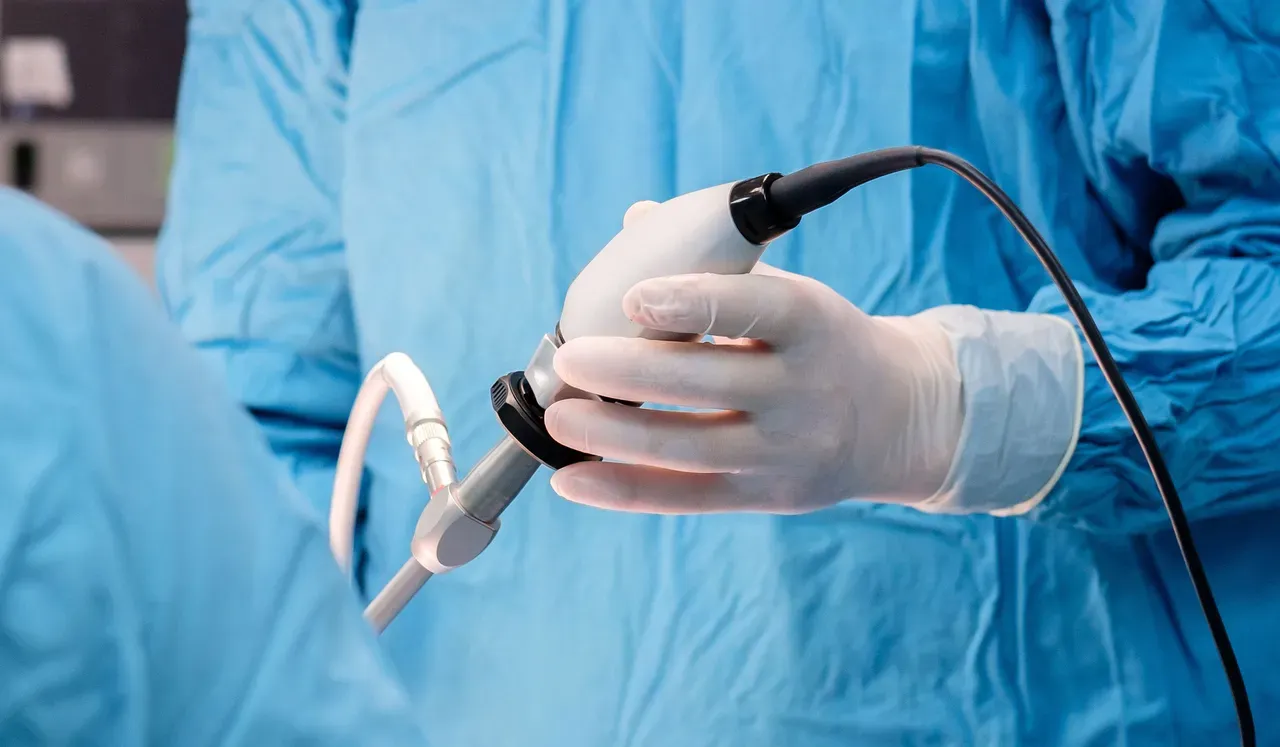
Research sits at the center of Dr. Hustedt’s career. His Sumner Koch research award recognized the top hand surgery research paper in the United States. He has received multiple national research awards in addition to that honor.
The Nervexa protocol itself comes from research. Dr. Hustedt spent years studying chronic joint pain and the nerves that carry it. He looked for ways to help the patients he kept meeting who did not fit the traditional orthopedic pathway. The Nervexa Approach is backed by 10 years of clinical data and peer-reviewed science.
Reviews describe outcomes for individual patients. Research describes outcomes across many patients over time. Both are useful, and they answer different questions.
A single review might tell you that one patient walks without pain again. Research tells you how often patients like that one see similar results and which patients respond well. When you read Dr. Joshua Hustedt reviews, think of them as personal stories that sit on top of a larger body of clinical work.
Many patients come to us through their own doctors. Community physicians often want evidence before they refer a patient for a new treatment. They want to see clinical trials and medical journal findings that support the approach. Our For Providers gathers technical information for doctors who are considering a referral.
Patients can also share that page with their primary care doctor or another specialist. It can make a referral conversation easier, especially when a patient’s current doctor has not heard of Nervexa yet.
Dr. Hustedt’s work has drawn outside attention. Our In The Press page collects coverage of Nervexa and its development. Press coverage is different from patient reviews. It often explains the science in plain language and gives context about why the approach is new.
Patient experience covers everything from the first conversation to life after treatment. At our office, that experience starts with a consultation. During it, Dr. Hustedt or Bri Silvestri, Physician Assistant, PA (NCCPA-certified), reviews your history, the joint that hurts and the treatments you have already tried. Imaging and past medical records help guide that discussion.
The goal of the consultation is a clear plan. You leave knowing whether the Nervexa Approach fits your situation, which of its parts make sense for you and what recovery is likely to look like. If traditional orthopedic surgery is a better fit, that is discussed too.
Care continues after treatment. Patients who have had embolization, nerve transfer or nerve stimulation return for follow-up visits with Dr. Hustedt or Bri Silvestri, Physician Assistant, PA (NCCPA-certified). These visits track progress and plan any next stage.
Our patient testimonials page shares stories from people treated by Dr. Hustedt and our team. These stories are a good place to start because they come from patients who chose to share their experience in their own words.
Reviews are most helpful when you read them with a purpose. These tips can help you get more from them.
Find patients who match your situation. A review from a 70-year-old with knee pain will tell you more about your own outlook than a review from a younger patient with a wrist injury. Look for details such as age, the joint involved and the treatments a patient tried before coming to us.
Pay attention to the problem that brought them in. Patients who were turned down for joint replacement, patients whose cortisone shots stopped working and patients with pain after a replacement each describe a different starting point. Matching the starting point makes a review more relevant.
Look for descriptions of daily life afterward. The most useful reviews describe what patients can do now. Walking the dog, playing a round of golf or sleeping through the night tells you more than a general statement about feeling better.
Notice how reviewers describe recovery. Most patients return to normal activities within six weeks of the Nervexa Approach. Reviews that talk about the weeks after treatment can help you picture your own recovery and plan around it.
Read several reviews, not just one. Any single story reflects one person’s body and circumstances. Reading many reviews gives you a clearer sense of common themes.
Separate the treatment from the logistics. Some reviews focus on medical results. Others focus on scheduling, travel or paperwork. Both are fair to share, but they answer different questions. Decide which matters most to you.
Reviews are personal, and they have limits. A review cannot tell you whether you are a candidate. It cannot account for your health history, your imaging or your goals. Two patients with the same joint can have very different needs.
That is why reviews work as a starting point. They help you form questions. The consultation is where those questions get answered for your specific situation.
Many patients find it helpful to write down a few things they noticed while reading reviews. Questions such as "How does my situation compare to this patient’s?" or "Would I need all three parts of the approach?" make for a focused conversation. Dr. Hustedt and Bri Silvestri, Physician Assistant, PA (NCCPA-certified), can explain how a reviewer’s experience might or might not apply to you.
Access to care matters as much as the care itself. Many patients who come to us have been told no elsewhere, often because of insurance decisions about joint replacement. We work to make the Nervexa Approach available to as many patients as possible.
Our team works with most major insurance plans. These include commercial insurance, Medicare, Medicare Advantage and Medicaid. We also see workers’ comp patients. Coverage for any procedure depends on your specific plan.
Under the No Surprises Act, patients are protected even when we are out of network for their plan. In that case, you pay your normal in-network costs with no surprise bills or extra fees. Our team checks your benefits, explains your options and helps with out-of-network billing when needed.
Every patient receives the same care regardless of insurance type. International patients have cash pay options. You can learn more on our insurance page.
A large share of our patients travel to Phoenix from other states. Dr. Hustedt has thought carefully about how to make treatment practical for them. Patients who need more than one part of the Nervexa Approach can plan their visits so treatment fits into a manageable stretch of time.
Our out-of-town patients page explains what travel can look like. Reviews from out-of-state patients are especially useful if you plan to travel. They often describe how the trip worked and what the time away from home was like.
Dr. Joshua Hustedt is a Stanford-trained, double board certified orthopedic surgeon with an MD and an MHS. He holds memberships in three national surgical societies and has earned national research honors, including the Sumner Koch research award. He developed the Nervexa procedure, a minimally invasive alternative to joint replacement for the knee, shoulder, elbow, wrist and hand, and foot and ankle. He and Bri Silvestri, Physician Assistant, PA (NCCPA-certified), care for patients who were turned away from joint replacement, patients whose injections stopped working and patients with pain after a replacement.
Reviews are a good first step. Read the stories on our testimonials page, look for patients whose situation resembles yours and bring your questions to a consultation. Learning about the joint replacement alternative will give you a solid base for that conversation.