You’ve done the research. You’ve talked to your doctor. You’ve probably been dealing with joint problems long enough that surgery is starting to sound like a real solution, and now you want the practical details. Here’s what you need to know: the surgery itself typically takes between 1.5 and 2 hours. When you factor in preparation, anesthesia, and time in the recovery room, most patients spend about 4 to 6 hours at the hospital from start to finish. That’s the core timeline, and everything else builds from there.
Understanding what happens during each of those hours can make the whole experience feel far more manageable. So let’s walk through it together.
Before diving into timelines, it helps to understand why surgery becomes necessary in the first place. Most patients who reach the point of considering a replacement have lived with knee pain for years – often caused by osteoarthritis, rheumatoid arthritis, or significant injury. Cartilage, the cushioning tissue inside the knee, breaks down over time. Once it’s gone, bone grinds against bone, causing pain, swelling, and stiffness that medication and physical therapy can no longer manage.
When conservative treatments stop working, surgery becomes the most effective path toward genuine, lasting relief.
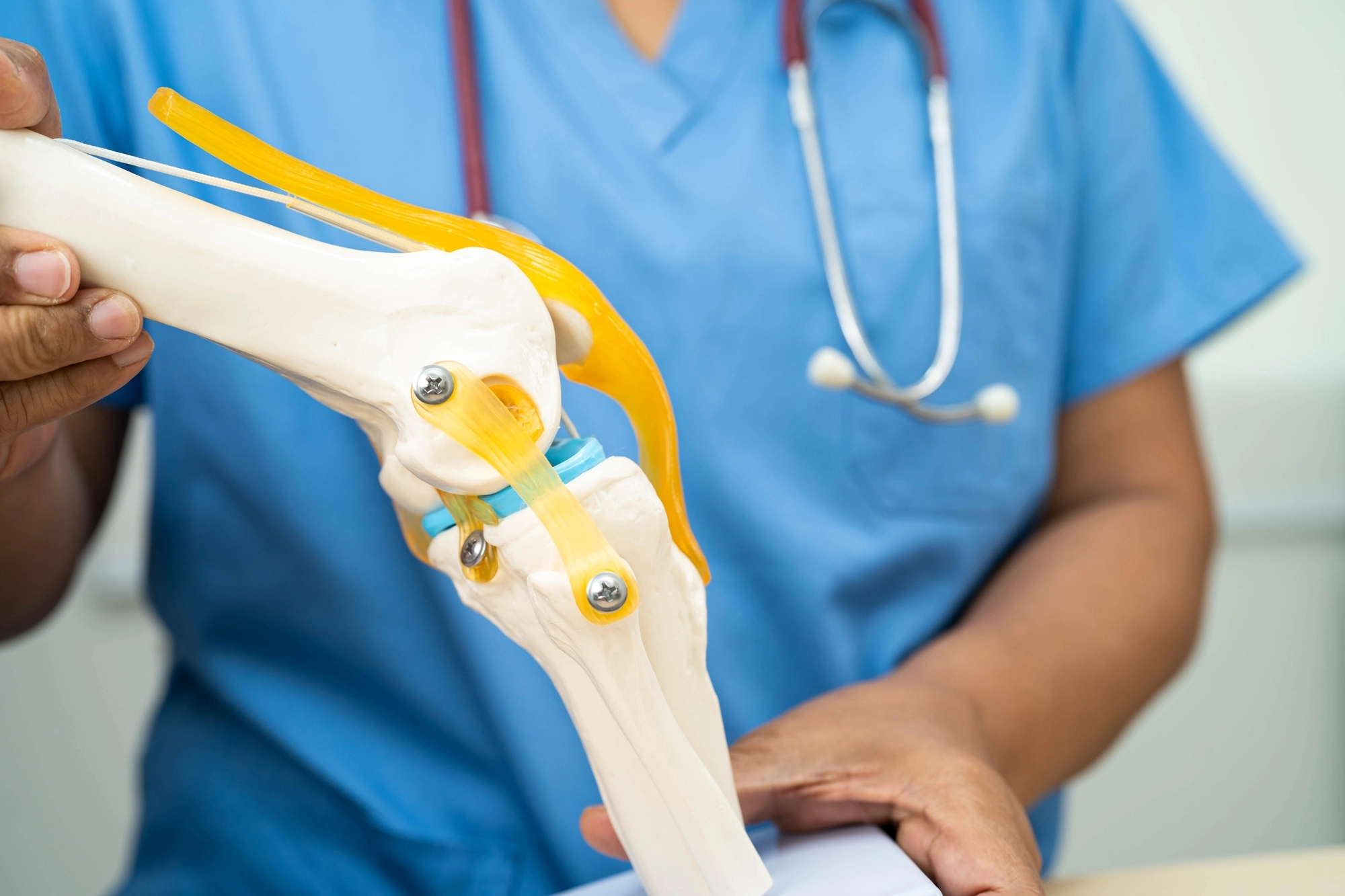
The knee joint is one of the largest and most complex joints in the body. It connects the thighbone (femur), shinbone (tibia), and kneecap (patella), held together by ligaments, tendons, and cartilage. This joint handles enormous pressure with every step – roughly three to five times your body weight when you walk up stairs.
Over decades of use, or following certain injuries, the cartilage that keeps those bones moving smoothly wears away. When that happens, even simple daily activities like walking to the mailbox or standing up from a chair can become genuinely difficult. That’s when a surgeon may recommend replacing the damaged surfaces entirely.
This is the question most patients want answered first, so let’s be specific.
Before the procedure: Once you arrive at the hospital or surgical center, you’ll spend about 1 to 2 hours in pre-op. During this time, the surgical team will:
During surgery: The procedure typically lasts 1.5 to 2 hours for most patients. Complex cases, such as significant deformity, previous surgeries, or revision procedures, may take longer, sometimes up to 3 hours.
After surgery: You’ll spend 1 to 2 hours in the recovery room while the anesthesia wears off and the care team monitors your vital signs, pain levels, and circulation in the leg.
In total, most patients and their families should plan for a full day at the facility.
A full knee replacement surgery, also called a total knee replacement, involves removing the damaged cartilage and bone from the end of the femur and the top of the tibia. The surgeon then caps those surfaces with metal components and adds a plastic spacer in between to create a smooth, artificial joint. The kneecap surface may also be resurfaced, depending on your specific situation.
This is a major orthopedic procedure, but it is also one of the most commonly performed and well-studied surgeries in modern medicine. Hundreds of thousands of Americans have it every year, with consistently high success rates and meaningful improvements in quality of life.
Most patients stay in the hospital for 1 to 3 days after surgery before beginning outpatient recovery. The overall recovery period – meaning the time until you’re back to most normal activities – is typically 3 to 6 months, though many people feel significantly better within 6 to 8 weeks.
If you’re living with chronic knee pain and want to explore options before committing to a full replacement, Nervexa™ may be worth a conversation with your doctor. Designed for patients experiencing knee discomfort and reduced mobility due to knee arthritis, Nervexa™ is a minimally invasive procedure that targets the nerve signals responsible for severe pain in and around the joint without the extensive tissue disruption of a traditional replacement.
The process begins with a thorough physical exam and a review of imaging tests to confirm you’re a good candidate, followed by a procedure that most patients tolerate well and recover from quickly. One of the biggest advantages is recovery time – significantly shorter compared to total knee arthroplasty, allowing patients to return to daily activities sooner.
Clinical results have shown meaningful reduction in pain and measurable improvements in knee function, giving many patients the pain relief they’ve been looking for without the commitment of major surgery. If knee discomfort has been holding you back and you’re not quite ready for a full replacement, Nervexa™ offers a compelling middle ground worth exploring with your orthopedic care team.
It’s worth clarifying the difference between a full replacement and a less invasive option called knee arthroscopy. Arthroscopy is a minimally invasive procedure where a surgeon inserts a small camera and instruments through tiny incisions to diagnose or treat specific problems, like repairing a torn meniscus or removing loose tissue.
Knee arthroscopy takes considerably less time, often 30 to 45 minutes, and most patients go home the same day. However, it is not a substitute for a total knee replacement when the joint damage is severe. If your surgeon has recommended a full replacement, arthroscopy won’t address the underlying structural damage that’s causing your symptoms.
You may hear your surgeon refer to the procedure as knee arthroplasty. This is simply the medical term for knee replacement. “Arthroplasty” means surgical reconstruction or replacement of a joint, and it applies to both partial and total procedures.
A partial knee arthroplasty targets only one compartment of the knee (usually the inner side), while a total knee arthroplasty replaces all three compartments. Partial replacements involve less tissue removal and often have a shorter recovery, but they’re only appropriate for patients whose damage is limited to one area of the joint.
Your surgical team will determine which approach is right for you based on imaging, physical examination, and your overall health.
One of the most common concerns patients have going into surgery is post-operative discomfort. Modern pain medication protocols have improved dramatically in recent years, and most patients are surprised by how manageable recovery feels.
In the hospital, you’ll likely receive a combination of:
Nerve blocks (targeted injections that reduce sensation in the knee area)
Anti-inflammatory medications like NSAIDs
Acetaminophen
Opioid medications, if needed, in short-term, carefully managed doses
The goal is to keep you comfortable enough to begin moving because early movement actually speeds healing and reduces complications. Most patients are up and walking with assistance within hours of surgery.
Once you’re home, your pain management plan will shift to oral medications and non-drug strategies. Your care team will walk you through exactly what to take and when, but in general, patients transition off stronger medications within the first 1 to 3 weeks.
Alongside medication, effective recovery involves:
Icing the joint regularly in the early weeks to reduce swelling
Physical therapy, which typically begins the day after surgery and continues for several weeks
Elevation to help fluid drain from the knee
Gradual activity increases guided by your physical therapist
Staying on top of your pain management schedule, rather than waiting until discomfort peaks, makes recovery smoother and helps you engage fully with rehabilitation exercises.
Whether your doctor recommends partial knee replacement surgery or total knee replacement surgery depends on how extensively the joint has deteriorated. Conditions like degenerative joint disease erode the synovial fluid that keeps the joint lubricated and moving smoothly, and once that damage spreads across the entire knee joint, a full replacement is typically the most effective solution.
Your orthopedic surgeon will evaluate how much healthy bone remains and whether the knee’s ligaments are still structurally sound. Younger patients are assessed with particular care, since they face a greater chance of eventually needing a revision knee replacement as components wear down over time.
On the day of the surgical procedure, anesthesia is administered — either a spinal block that numbs the lower body or general anesthesia for patients who require it. Your knee surgeon will then make a surgical incision to access the joint and carefully work around the thigh bone before addressing the shin bone below. Damaged bone is cleared away, and the surgeon will replace damaged cartilage with precisely fitted knee implants using a refined surgical technique.
After the incision site is closed, most patients stay in the hospital overnight while the care team monitors for blood clots and watches circulation closely. Blood thinners are typically prescribed as a preventive measure, and within a few hours of waking, most patients are already up and moving with assistance.
For total knee replacement patients, the recovery process requires patience and consistency more than anything else. Physical therapy begins almost immediately and works to relieve pain, restore range of motion, and rebuild confidence in the joint. You’ll also work with your care team to manage pain effectively during the weeks at home, tapering off stronger medications as your comfort improves. It’s completely normal to feel sore and fatigued in the early stages. That’s your body doing exactly what it should.

About the Author
Dr. Joshua Hustedt

March 30, 2026