
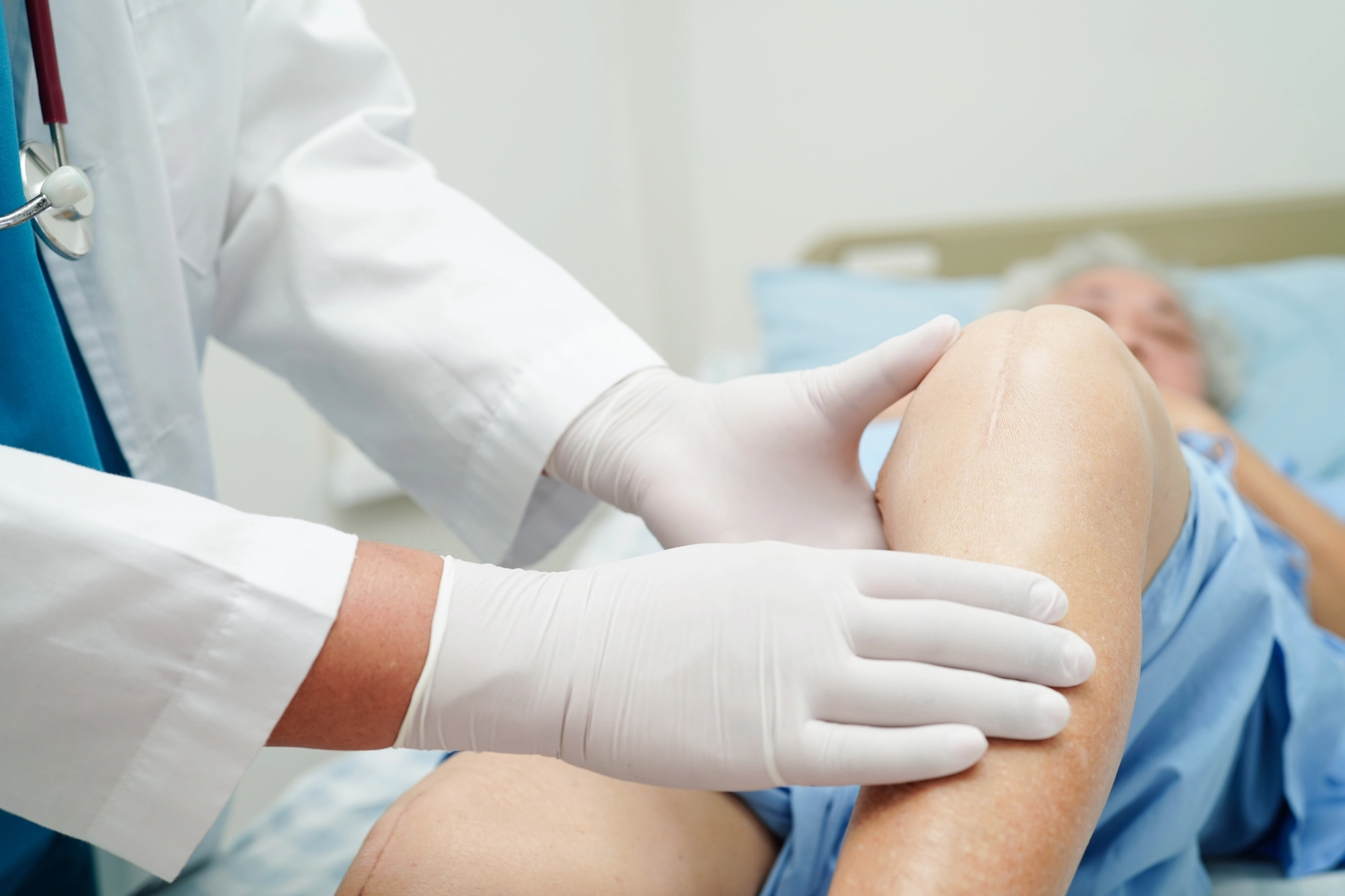
How Long to Recover from Knee Replacement?
You’ve made it through the hard part. Now your mind is racing with questions about what comes next, and the biggest one is probably: how long until I feel like myself again?
Most people are back to light daily activities within 6 weeks and fully recovered within 3 to 6 months. Some people feel great even sooner. A small number take up to a year to reach peak results, and that’s completely normal, too. What matters most is that recovery is more manageable than most people expect.
What Happens to Your Body After Knee Replacement Surgery
Knee replacement is one of the most common and most successful orthopedic procedures performed today. More than 700,000 Americans have it done every year. The surgery involves removing damaged cartilage and bone from the knee joint and replacing it with an artificial implant made of metal and plastic.
The procedure typically takes 1 to 2 hours. Most patients spend 1 to 3 days in the hospital before heading home, and many people are walking with assistance on the very same day as their surgery. That might sound surprising, but early movement is actually a cornerstone of the healing process.
Nervexa™ offers an innovative alternative to knee replacement surgery
Your Knee Replacement Recovery Timeline, Week by Week
Recovery doesn’t happen all at once. It unfolds in stages, and each one builds on the last.
- The first two weeks are about getting stable. You'll manage swelling, take medication as prescribed, and start moving gently. You'll likely use a walker or crutches. Sleep can be disrupted, and that's normal. Your body is working hard behind the scenes.
- Weeks 3 through 6 bring visible progress. Most people trade the walker for a cane. Swelling decreases noticeably. You'll start to recognize your knee again – it bends more, it hurts less, and getting around the house feels far less like a project.
- Months 2 through 3 are when many patients return to driving, light work, and low-impact activities. You'll be sleeping better and spending much less mental energy on your knee.
- Months 3 through 6 are the home stretch for most people. Strength and flexibility continue to improve, and most patients feel squarely back in their normal lives by this point.
How Physical Therapy Gets You Back on Your Feet
This is where recovery actually happens. Your therapist will guide you through exercises designed to rebuild the muscles around your knee, restore your range of motion, and retrain your walking. Sessions typically begin within days of surgery and continue for several weeks after discharge.
What you’ll work on:
- Straightening and bending the knee progressively
- Strengthening the quadriceps and hamstrings
- Balance and coordination
- Walking with natural form
Pain Management: What Actually Works After Knee Surgery
Discomfort is a real part of recovery, but it can be well-controlled. Modern pain management after knee surgery is far more sophisticated than it used to be, and your care team will typically use several approaches together rather than relying on a single medication.
This might include prescription anti-inflammatories, nerve blocks placed during surgery, ice therapy, elevation, and over-the-counter options like acetaminophen. The goal is to keep you comfortable enough to move because gentle movement is medicine.
Understanding the Difference Between Surgical and Chronic Knee Pain
It’s worth separating the two experiences.
Surgical pain is sharp and raw. It typically peaks in the first few days and then steadily improves. What tends to linger a bit longer is more of a deep ache or morning stiffness, especially after activity.
Most people find that their overall knee pain is dramatically lower by the 3-month mark than what they experienced before the procedure. That’s the trade-off worth remembering: short-term recovery discomfort in exchange for long-term relief.
A Realistic Look at Returning to Normal Activities
A question nearly every patient asks is: When can I just get back to my life?
Here’s a general timeline:
Walking short distances indoors: Day 1-2 post-surgery
Light household tasks: 2-3 weeks
Driving: 4-6 weeks (once off strong pain medications and able to react quickly)
Returning to a desk job: 4-6 weeks
More physical or standing work: 3 months or more
Low-impact exercise like swimming or cycling: 6-8 weeks
Hiking or higher-impact activities: 3-6 months
These are general windows, not hard rules. Your care team will provide personalized guidance based on your progress and lifestyle.
What Modern Joint Replacement Surgery Looks Like
Surgeons today approach joint replacement surgery with recovery in mind from the very first incision. Minimally invasive techniques, precise implant positioning, and better anesthesia protocols all mean that patients wake up with significantly less trauma to the surrounding tissue than in previous decades.
Same-day or next-day discharge is increasingly common. You’ll likely be on your feet within hours of leaving the operating room.
Most knee implants last 15 to 20 years or more, and many patients report that the results exceeded what they hoped for.
Habits That Lead to a Faster Recovery
While everyone’s timeline is different, certain habits consistently help people heal better and sooner:
Start moving early. Gentle movement reduces the risk of clots and stiffness from day one.
Take pain medication as scheduled, not only when it gets bad. Staying ahead of discomfort helps you move more freely.
Eat well and stay hydrated. Your body is rebuilding tissue and needs protein, vitamins, and fluids to do it.
Elevate and ice regularly, especially in the first two weeks, to keep swelling in check.
Do your home exercises every day, even when it’s just 10 minutes.
Ask for help. Letting people support you in the early weeks isn’t weakness – it’s smart planning.
Prioritize sleep. Most healing happens during rest.
The patients who recover fastest aren’t always the youngest or fittest. They’re the ones who stay consistently engaged with their recovery, day after day.
Staying in Touch with Your Healthcare Provider
Your orthopedic surgeon will want to see you at several points throughout the recovery process, and those appointments matter more than people often realize. At each visit, your care team checks the incision site for signs of infection, monitors knee function as it progresses, and adjusts your plan based on how your body responds.
Most patients notice significant improvement between visits and may be tempted to skip follow-ups once they start feeling better. Don’t. These check-ins exist to ensure proper healing at every stage, not just when something feels wrong. Beyond your knee specifically, your doctor will also keep an eye on your general health – circulation, medication side effects, and how well you’re sleeping and moving overall. Staying consistent with your appointments is one of the simplest ways to support a smooth recovery from start to finish.
Schedule an Appointment with an Experienced Orthopedic Specialist
If you’ve been living with persistent joint pain and wondering whether total knee replacement surgery is the right step for you, the best thing you can do is have an honest conversation with a specialist. An experienced orthopedic team will walk you through your options, set realistic expectations around pain relief, and give you a clear picture of what your recovery time could look like based on your age, health, and lifestyle. Every patient is different, and personalized guidance makes all the difference.
Reach out today and take the first step toward moving better and feeling like yourself again.
Nervexa™: An Innovative Solution for Knee Pain
The Nervexa™ approach offers a new way to address chronic knee pain without major surgery. Often described as the revolutionary alternative to joint replacement, this technique targets the nerves responsible for persistent pain rather than replacing the joint itself. By working to calm joint inflammation and reroute pain signals before they reach the brain, the treatment helps patients regain comfort and mobility while preserving their natural knee. The goal is not only short-term relief but long-term pain protection, allowing many people to stay active without the lengthy recovery that traditional surgery requires.
The Bottom Line
Whether you’re considering a partial knee replacement or a full total knee arthroplasty, understanding the journey from the recovery room to your regular routine helps you set realistic expectations from the very beginning. Hip and knee surgeons perform these procedures specifically to replace damaged cartilage and restore function to a joint that has stopped doing its job.
In the first few weeks, your focus will be on the essentials: following the doctor’s instructions carefully, taking prescription pain medication as directed, working closely with a physical therapist, and doing simple exercises (including pumping your calf muscles) to reduce swelling and lower the risk of blood clots. Most patients stay at the hospital overnight before heading home, and that early window sets the tone for everything that follows.
Full recovery and life with a new knee takes time, but the destination is worth every step of the process. As weeks turn into months, everyday activities become steadily easier and far less of an effort. Staying consistent with follow-up appointments allows your care team to track how your knee is healing and catch anything that needs attention early. Eating a healthy diet, prioritizing sleep, and finding ways to stay active within your guidelines

About the Author
Dr. Joshua Hustedt
Get Pain Free Life

March 30, 2026